
Overview
FormatTV
StudioTokyo Movie
AniList Score68%
StatusFINISHED
Characters
Reiji Fujitamain

Sara Halifamain

Sayoko Mitamurasupporting
Fei Cuisupporting

Tomomisupporting

Morihito Chinensupporting

Hirotosupporting

Hakaru Senjusupporting

Ramossupporting

Takuya Gotousupporting

Shuttle Crewbackground
Wakamonobackground
Staff

Fujihiko HosonoOriginal Creator

Masakazu KuboSupervisor

Nobumasa SawabeSupervisor

Toshiko SasakiCharacter Design
Yasuko ItouColor Design

Takashi SakuraiEditing
Katsuyoshi KobayashiSound Director

Eiko MorikawaSound Effects

Face 2 fAKEMusic
Kiyomitsu AokiAnimation Producer
Hideo KatsumataPlanning
Masao TakiyamaPlanning

Keisuke IwataPlanning
Souichirou SuzukiPlanning Assistance
Yoshitake TachikawaPlanning Assistance

Atsuhiro IwakamiProducer
Noriko KobayashiProducer

Katsunori NarumoAssociate Producer
Akira NishimoriDirector (eps 1-12)

Osamu YamasakiDirector (eps 13-37)
Other Details
Native Titleギャラリーフェイク
Aired Year2005 (WINTER)
Source MaterialMANGA
Genres
Mystery
Gallery Fake
2005TVFINISHED68% Score
Synopsis
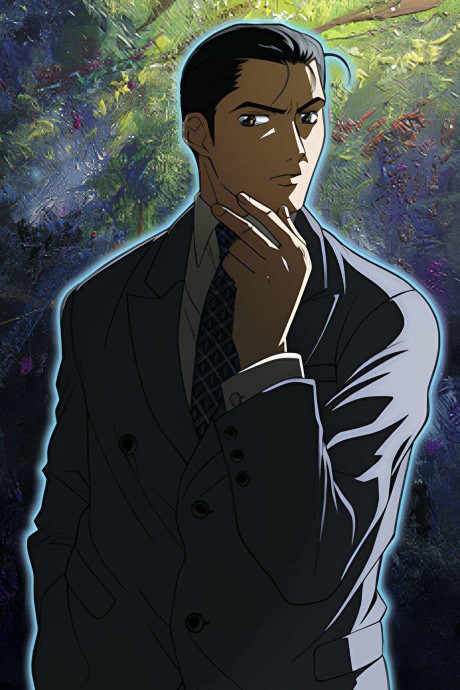
Fujita Reiji is the owner of an art gallery, Gallery Fake. He deals with fake items, and is also familiar with the black market. However, he has a special talent for art, and used to work for the Metropolitan Museum of Art in New York as a curator.
(Source: Anime News Network)
(Source: Anime News Network)

EP 1
The Man From Gallery Fake
A dealer asks $20 million Van Gogh's "Dorfstrasse at Sainte-Maries" from Fujita Reiji who offers only $2000 for the painting, claiming that it is a fake. Later, Fujita travels to New York with Sara Halifa to attend a Sotheby's art auction. At the pre-auction inspection, he encounters Mitamura Sayoko who accuses him of dealing with original art works on the black market. Fujita is attracted by a Monet haystack painting "End of Summer Morning". There they meet Fujita's former co-worker Max Watson at the MET, who is conducting the auction. Later, Fujita meets Kain Aubrey who had been the underbidder in recent auctions and offers to act as his broker for the haystack painting. Aubrey initially refuses, then agrees, setting a limit of $10 million for the painting which 15 years earlier had been re-attributed by Max Watson and sold cheaply to Bill Travers. At the auction, Sara bids for Fujita. After the bidding reaches $10 million, Fujita goes to $30 million, beating and frustrating the other bidder, Bill Travers. However the eventual purchaser is Kain Aubrey who promises to donate the painting to the MET on his death.

EP 3
The 13th Courier
While waiting with Fujita to board an airplane at JFK airport, Sara complains of being harassed. Later, they meet Moretti of the Ufizi Museum, also on his way to the Renaissance exhibition at the Daito Museum with his 12 couriers[a] to transport the paintings, including Raphael's "Virgin and Child". During the flight, a group of thieves attempt to steal the paintings, but they rupture an air conditioning circuit, causing the temperature to drop dramatically in the hold. Raphael's painting on wood begins to crack and Fujita recommends that it be repaired immediately in the climate-controlled cabin area. Fujita skillfully repairs the crack, but then negotiates with the Carlos, the gang's leader to let the delivery proceed, however Moretti has to pay a ransom to keep the paintings. When they arrive in Japan, Sara recognizes Carlos as the man who harassed her. As the exhibition opens, Fujita has earned the respect of the 12 couriers, who say that he could be a courier himself.

EP 4
Muse Courtroom
Fujita is arrested on suspicion of selling a fake Albrecht Dürer painting as real and so Mitamura is called as an expert witness and appraiser by the police. Although initially she believes the painting is a fake, a greeting card from Fujita with a copy of Kouhaku Hasegawa's ink painting "Shourinzu Byoubu" causes her to conduct further investigation and analysis. Finally, in court, she appraises the painting as a genuine Dürer, but possibly unfinished and signed with his unique monogram later after it was varnished. Fujita later meets Mitamura at Tokyo National Museum before the original six-panel painting of "Shourinzu Byoubu" and thanks her, although she still threatens to expose him as a charlatan.

EP 5
The Missing Golden Buddha
Mohorito Chinen, a Head-Inspector of Cultural Assets, visits Fujita inquiring about the theft of a carved wooden Bodhisattva statue from a Buddhist temple in Nara. Intrigued, Fujita visits the temple where they see an old wooden Fudou-Myou-Ou statue carved from a tree. The old owner who believes Fujita and Chinen were sent by his son Akihiko who is after the property and resents his father for how he poorly he treated his mother. Fujita offers to restore the statue, and researches the archives about a rumored golden Buddha statue that was once in the temple. While moving the fragile statue, a metal Buddha statue falls out, but heavily corroded as it was composed of gold, copper and silver. Frustrated because he hoped to requisition a golden statue, Chinen leaves in disgust. However, the statue is a fake, planted by Fujita who then retrieves the original golden Buddha statue from inside the Fudou-Myou-Ou. Meanwhile Akihiko and his father reconcile, and after they place the golden statue inside a tree for protection, Akihiko offers to sell the Bodhisattva statue he stole to Fujita, and then use the money to preserve the temple.

EP 6
The Jade Shop
Fei Cui switches the Hope Diamond with a fake while it is on route from the Smithsonian Institute to the Takada Museum. She then invites Fujita to her exclusive new Jade store and threatens to ruin Mitamura's reputation by revealing the fake unless Fujita provides her with his list of contacts in Tokyo. He hopes to play on her weakness for Cartier mystery clocks and scours Tokyo for one without success. Sara also searches for a clock to impress Fujita, and Fei Cui's manservant and masochist, Menou, offers to sell her the first ever made. Sara makes the exchange, and everyone's reputation is saved, meanwhile Menou is happy to be severely punished by Fei Cui when he interrupts her bath time.

EP 7
The Rembrandt Research Project's Challenge
A representative from the Rembrandt Research Project from Holland, Dr. Lastman, arrives in Tokyo. He pronounces that the Rembrandt painting in the Tokyo Takada Museum is a fake, horrifying the directors. Fujita offers to buy the painting at a discounted price but they refuse. Later, Fujita and Sara visit the small regional Tokiwa Museum which also claims to have a Rembrandt painting. Dr. Lastman and Mitamura also arrive to assess the painting. Dr. Lastman pronounces it a fake because of some technical details, but Fujita argues against his assessment, providing a different analysis of the same details. Eventually, when faced with a companion painting, Dr. Lastman agrees that the painting is genuine.

EP 8
The Father's Price
Schoolgirl, Tomomi Aonuma, is desperate to get into Shirayuki Girls Academy, but embarrassed by her bus-driving father who collects antique watches. She hopes that Fujita, whom she sees on the train daily, would impress the board if he was her father. She follows him to an antique watch exhibition and is surprised when her father enters and greets Fujita like an old friend. She learns more about her father after Fujita tells her about his passion for watches. She also develops a newfound respect for him after he berates her school principal for terminating an exam 5 minutes early according to his extremely accurate, top quality, antique watch.

EP 9
Invitation to El Dorado
Treasure-hunter Ramos invites Fujita on a hunt for treasure along the Amazon river, and they are accompanied by Professor Yoshioka. They eventually find a complete Mayan city underground, but are captured by the villagers who plan to sacrifice Sara to their gods. However Fujita uses a dinosaur-like carving to activate a secret switch which releases the huge Pororoca tidal wave, into the underground cavern. While they are being swept underwater, they see what appears to be a huge pliosaur.

EP 10
The Happy Prince
During the process of a robbing an emerald, Fei Cui encounters a young artist Hiroto who paints scenes from The Happy Prince. Later, she shows Fujita a jeweled bracelet owned by Sarah Bernhardt known as the Cleopatra. As Fujita leaves her Jade Shop, Sara angrily throws her cat at him in a fit of jealousy. Later, intrigued by the artist, Fei Cui follows Hiroto, and discovers that he is a small-time gigolo, chatting up and charming local girls. She asks Menou to arrange food and lodging for him and shows his paintings in her shop, but Fei Cui starts to lose her eyesight. That night, Hiroto arrives at her apartment with the last painting. He comforts her, and they spend the night together, but the next morning he is gone with the emerald. However Fei Cui's eyesight returns which Fujita attributes to the loss of the emerald. Later, Hiroto casually tosses the emerald into the sea as a swallow flies overhead.

EP 13
The Incarcerated Michelangelo
Fujita visits a remote old prison to view a fresco painted on a vaulted ceiling. He recalls many years ago when he was hired to assist the prisoner and tattooist Shimoda Tappei to paint a fresco on the ceiling. Known as Tatsu the Michelangelo, Shimoda immediately gives Fujita the unpleasant job of removing the old plaster in the oppressive heat of summer. Shimoda had studied in Italy and he shows Fujita the complex steps in creating a fresco. During the painting of his design, Shimoda takes ill, but insists on finishing the work. Back in the present, Mitamura arrives with the intention of saving the fresco prior to demolition of the building, however Fujita is now the owner, and agrees to it being destroyed according to the wishes of Shimoda who has passed away. Shimoda believed that art like a tattoo has a limited life and a finite period of existence.

EP 14
Beyond the Passage
Fujita travels to Paris to purchase art works. Meanwhile Sara finds an unsent letter in a frame at the gallery and travels to Paris to meet up with Fujita and deliver the letter. Sara's investigations overlap with Fujita's business dealings and they discover that the letter was written around Valentine’s day 20 years earlier by a man called The Clown, because of a birthmark on his cheek. It was addressed to a young woman whom he used to meet in a bar. They never spoke, just exchanged envelopes, but he was shot and killed before he could send the letter. Fujita and Sara find the woman and deliver the letter which she immediately destroys, not wanting to dwell in the past. However they find that the envelope also contained a beautiful ring and the woman bursts into tears. Later Fujita realizes that the stamp on the envelope which is now in ashes, was quite rare and valuable.

EP 15
Duet
Mitamura visits an art collector and finds that he is dying. Dalem, a shady art dealer prepares to privately auction the Vermeer painting "The Concert" for his boss Leone. It was stolen 15 years ago, from the Isabella Stewart Gardner Museum and Scotland Yard's Inspector Roger Warner disguises himself as the art collector Mr Peters to trap Dalem. Meanwhile Fujita, with Mitamura disguised as his secretary, meet in London to retrieve the painting on behalf of the museum. Fujita proposes to the fake Mr Peters that they cooperate to keep the bid price low. They confirm the painting that is the original is not a fake by the famous forger Jacques van Meegeren. It is the original, but damaged, so Fujita offers $6 million for the painting which is worth a possible $100 million. Dalem is warned that Peters is a Scotland Yard agent and prepares to kill him, but Fujita pulls his fake gun and shoots first, appearing to kill him. It is revealed later that Fujita was acting for the collector who is dying, and after his death, he promised that the fully restored painting would be donated to a museum.

EP 16
Yang Guifei's Fragrance
Fujita asks Sarah to collect an outstanding debt from actress Akiyoshi Masako who is about to star as Yang Guifei in her next play. She visits perfumer Jean-Paul Koumoto seeking more body fragrance pills and incense to infuse her clothing. The legendary Imperial Consort Yang Guifei was said to emit an extraordinary pleasant scent from her body. Sara listens outside and is discovered by Koumoto because of her body scent and he asks her to wear his fragrance. Meanwhile Akiyoshi offers Fujita a valuable incense burner she stole from Koumoto for the painting but he refuses. She then pushes his hand to crush the incense burner and then forces him to repair it. Koumoto creates a fragrance pill for Sara which is incredibly effective. Koumoto discovers the theft, and retrieves his incense burner from Fujita. However, when Koumoto drugs Sara to make love to her, the incense burner emits the smell of wasabi implanted by Fujita, killing his passion. As Sara escapes, she meets Akiyoshi who is planning to kill her, but is instead entranced by her body fragrance and then uses Sara for inspiration in her role as Yang Guifei.

EP 17
The Mysterious Mechanical Tale
Fujita visits his family's village and grandmother's grave after a long absence. He is asked to appear at a public hall "Treasure Appraisal Association", and reluctantly agrees. Although he is presented with number of counterfeit works, he buys a metal sake-serving karakuri crab[b] from the Edo period for 5 million yen. However he worries about the warning of its former owner who said that "Who puts this crab close to him, somehow suffers from the heart". Over the next few days, Fujita works late and during the nights he hears disturbing mysterious bells and dreams that he sees a karakuri doll that says its heart was taken. He becomes sick and is take to hospital where he asks Sara to investigate the crab. Sara and Mitamura visit his village and return with another doll which Fujita recognizes as the one from his dream. They had discovered that its main spring was taken to replace one which broken in the karakuri crab.

EP 2
The Wounded 'Sunflowers'
Mitamura encounters Sara atop the Empire State Building and asks her about the van Gogh's "Sunflowers" painting which Mitamura, as the new director of the Tokyo Takada Museum presented to the museum one year earlier. The damaged phantom "Sunflowers" painting was believed burned and lost during World War II. Later, a woman from a wealthy Arab family asks Fujita to obtain the phantom "Sunflowers" painting on her behalf. When Fujita asks Mitamura for the painting, she agrees, but asks Fujita to assist in restoring some historic Shigaraki pottery from a collection of shards to trap him as a charlatan. Mitamura fails to trap Fujita, but he manages to convince Mitamura of his skills. He demands the painting, but she refuses. Fujita explains that it is a fake, but highly valued by the young woman who rescued it after losing her whole family. When Mitamura returns to Takada Museum, she finds that Fujita has replaced the fake painting with the restored original.

EP 11
Death on the Battlefield
Fujita and Sara fly to Vietnam where he meets Ho-San who offers him an old camera, a 1965 Leica M3. It was reputedly owned by the Pulitzer Prize winning war photographer Kyousuke Kawaguchi who apparently died during the Vietnam War. Fujita uses Ho-San to track down Kawaguchi, and finds him living in a village married to a Vietnamese woman. Kawaguchi initially denies his identity, but then confesses his story of how he could no longer tolerate the horrors and cruelty of the battlefield and stopped taking photographs. Fujita offers to buy his unreleased photographs, but Sara tries to destroy them as she reveals that war killed her family. As Fujita tries to console her, Kawaguchi photographs them together with his old camera.

EP 12
Living Ophelia
Sara is scheduled to fly from Mumbai back to Japan, but while Fujita is waiting for her at the airport, it is reported that the airplane exploded and crashed into the sea. He then meets Ali from the Kerabian Embassy who confirms Sara was on the passenger list. A week later, with no news about Sara, Mitamura visits Fujita and finds the apartment a mess and Fujita in a bad mood. She tries to console him, but all he talks about is Sara. Later, at a Kerabian charity event, Fujita controversially donates the painting, "Ophelia" painted by Everett Millais, based on the character in Shakespeare’s Hamlet. He says it is a donation from Sara from whom he expects to be reimbursed, refusing to accept that she may be dead. Both Mitamura and Fujita are severely affected by Sara's disappearance. However, with Fujita now fearing the worst, Sara suddenly arrives home. She says that she got off the airplane to buy a carpet which she had promised to do and became stranded in Pakistan. After criticizing the quality of the carpet, Fujita then grudgingly accepts the gift and leaves.

EP 18
Led by a Map
A map store owner in New York refuses to sell his originals maps, only reproductions. Meanwhile, Fujita's old friend, the treasure hunter Ramos is down on his luck. The owner, while complaining about Ramos, the former lover of his daughter Marian, and rejoicing over framed pieces of an ancient map purchase, he collapses. While he is in hospital, Ramos and Marian begin selling the antique maps and Ramos finds the ancient map which he believes may be a treasure map. He asks Fujita to repair it and Fujita agrees for $50 thousand. Ramos contemplates a future treasure hunt while Marian contemplates marriage, and she tries to burn the map. As Fujita restores it, he believes that it may be part of an ancient Archimedes mechanical planetarium, and a treasure in itself. However, Ramos cannot give up hi life of adventurous treasure hunting and leaves while Fujita completes the planetarium and takes to the hospital for Marian's father.
EP 19
Chinen's Close Call
While Mohorito Chinen is admiring a Maitreya (Bodhisattva) statue in the Tengakuji temple in Iwate Prefecture, he accidentally breaks off a finger. He desperately calls Fujita to repair it, but before he arrives, the statue is sent to Kyoto for a festival by truck. Fujita then hatches a plan to repair the statue while in transit and enlists the aid of his friend Kido, a counterfeiter to copy the swipe card to open the rear doors of the truck. While Chinen tries to delay the truck, Fujita manages to repair the statue and escape undetected. However, Chinen is now forever in Fujita’s debt for saving his career.

EP 20
Star in the Landscape
Souami, also known as Shinsou, was a watercolor painter during the Muromachi period, and served the 8th shogun of the [Ashikaga shogunate]]. In the present, a space shuttle carrying Japanese astronaut Sekine-Jun is about to be launched and he recalls the time years ago when he and Fujita studied art at college. Although Sekine was skilled with watercolors and had to manage the family art gallery, his dream was to be an astronomer. He asked Fujita for funding, and promised to create a painting for him. At the same time, Fujita is coerced into guiding the international movie director, Basso, around Kyoto. Basso is unimpressed with Japanese culture until Fujita takes him to see a six-panel ink painting across folding screens by Shinsou. Meanwhile in space, Sekine uses freeze-dried coffee dissolved in water to create a unique Wabi-sabi painting for Fujita, who is not going to sell it.

EP 21
The Man of Senjudou
Sarah buys a watch from a young man in the street for 3 million Yen. When Fujita sees the wristwatch he makes Sara take him to the shop called Senjudou (Temple of a thousand hands) that created the watch. Fujita discovers an eccentric young watchmaker, Hakaru, who is going broke because of the few sales he makes. Fujita commissions him to make a copy of a Marie Antoinette pocket watch originally created in 1782 by Abraham-Louis Breguet for which he will pay 100 million Yen. However the plans Fujita provides are incomplete and Hakaru must design his own minute-repeater mechanism. The challenge is almost insurmountable, but he succeeds, creating an exclusive and valuable Senjudou version of Marie Antoinette pocket watch.

EP 22
The Empress of the Hermitage
In the past, the provincial city of Kamae flourished in steel-making, but it is now in decline and plans an art exhibition in conjunction with the Russian Hermitage Museum. Ekaterina Kalchnikova, called the "Empress of Hermitage" is dispatched as to curate the exhibition and promote a plan to make the Kamae museum Hermitage's Japanese annex. In a flashback, a young Fujita is shown working with Ekaterina before he moved to the MET. The mayor of Kamae wants to appoint a high-profile university professor Maruyama to be the chief of the annex, but Ekaterina insists that Fujita, should be the director. In a test, Fujita demonstrates higher skills than Maruyama, but he rejects the offer to be director. Instead, he strikes a deal for Ekaterina's favorite painting, the Benois Madonna, to be exhibited in Japan for one month each year.

EP 23
Lady Sara ~First Part~
Fujita agrees to spend a short vacation with Sarah at Sara's villa in London to escape the Japanese summer heat. While they are shopping in London, Fujita meets an old friend, Charlie, who works for Sotheby's head office. Charlie assumes that Sara is Fujita's wife or girlfriend, and she is hurt when Fujita describes her as "just a secretary". Charlie says that he will hold auction sale of the famous actress Janet Houston's estate and invites them to attend. At the auction, Charlie asks Sara to model the clothes and jewelry as she is the correct size and beautiful. He even disguises the burn on her arm with make-up. Fujita hardly recognizes the beautiful model as Sara. Later, Charlie spends time with Sara, taking her to meet Mary, the woman he considers as his mother, at the Kew Gardens. Meanwhile, Harry Donaldson offers Fujita a herbarium page of the scientist Charles Darwin which is obviously stolen. That evening, Charlie proposes to Sara.

EP 24
Lady Sara ~Second Part~
The next day, as Sara considers Charlie's wedding proposal, Fujita investigates the Darwin herbarium pages. When he shows them to Charlie, Charlie realizes that they came from Jodrell Laboratory where Mary works. That night, they go to a casino which is reportedly uses as a meeting place. There, Charlie sees Mary with Donaldson, and she admits to stealing and selling the herbarium pages to fund her gambling addiction. Later, Charlie tells Fujita that he proposed to Sara who has since disappeared. Charlie offers to find Sara if Fujita could help him by finding and returning all the stolen pages. Fujita uses his connections to find the man who eventually bought the pages, Mr Sanders, a well-known psychic. He agrees to sell them to Fujita, but at 100 times what he paid for them. He also tells Fujita that he is about to lose something very precious to him and offers to sell him some clues. Fujita realises that Sanders is referring to Sara eventually Fujita uses the clues to find Sara looking at a Turner painting at the Tate Gallery where Fujita says that he needs her. They have a tearful reunion and return to Japan together.